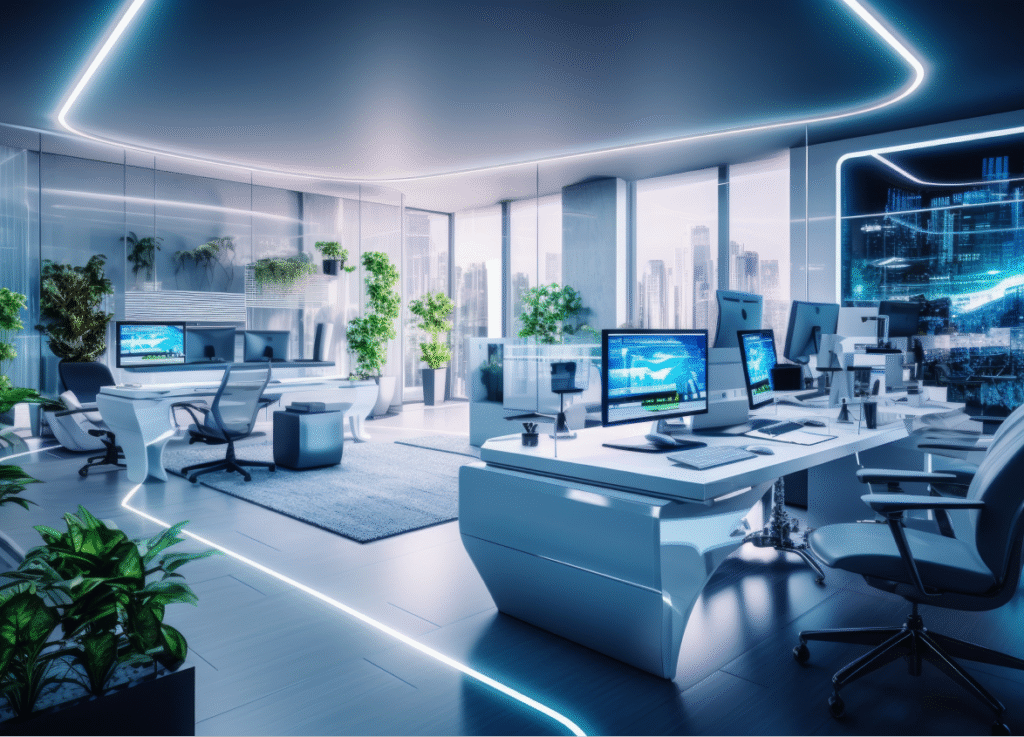
When people talk about the future of workspaces, it often gets abstract. Talk of digital transformation, flexible working models, and culture-focused design takes centre stage. But beneath it all, there’s a more grounded question that every business needs to answer. Is the space clean? Is it efficient? Is it ready for useevery day, by everyone?
The practical side of managing business spaces rarely makes headlines, but it’s where smart decisions really show their value. From the way washrooms are maintained to how air flows through a building, it’s the practical stuff that enables everything else to function. The future of smart spaces isn’t about making every surface touch-sensitive or installing tech for the sake of it. It’s about building environments that actually support the work, the people, and the outcomes.
Let’s explore how businesses are getting smarter by focusing on the basics like cleanliness, efficiency, and readiness.
Clean Isn’t Optional Anymore
The standard for workplace cleanliness has changed dramatically in recent years. What was once considered a nice-to-have is now the baseline. Staff expect hygienic environments. Visitors judge companies by their cleanliness. And for many industries, from healthcare to food service, maintaining high standards isn’t just about appearance, it’s about compliance and safety.
Read More: How to Design a Stylish Home That Supports Lifelong Living
But smart businesses know it’s not just about more cleaning. It’s about cleaning smarter. That means using data to schedule maintenance where it’s actually needed. It means equipping spaces with easy-to-sanitise materials. It means choosing systems, like touch-free taps and hand dryers, that reduce contact points and make hygiene part of the design rather than a daily battle.
Reliable, low-energyhand dryers are a great example. They’re designed to improve hygiene without the hassle or running cost of traditional methods. They also reduce waste from paper towels and fit seamlessly into modern facilities.
The future isn’t about constant sanitising. It’s about environments that are easier to keep clean in the first place.
Efficiency as a Business Tool
Energy bills, resource use, staffing and efficiency affects them all. Yet too often, office efficiency is looked at through a narrow lens. Focused on desk layouts or meeting room bookings. But true efficiency runs deeper. It’s in how your systems run, how your space flows, and how responsive your building is to real-world use.
Smart facilities don’t need to be complex. But they should be purposeful. This could mean using motion sensors to turn off lights when no one’s around. Or installing heating systems that learn the rhythm of the building and adjust automatically. Even minor upgrades, like changing tap fittings to reduce water usage, can lead to long-term savings.
And let’s not forget workflow efficiency. A well-maintained lift. A smooth entry system. A kitchen stocked with what people need. These things remove friction from the day. People waste less time, feel less frustrated, and get more done. That’s real-world productivity.
Ready for Whatever Comes Next
One of the most important qualities in a modern business space is adaptability. The ability to shift use without tearing everything apart. In the last few years, offices have gone from being fully staffed five days a week, to near-empty, to somewhere in between. The businesses that handled this best weren’t necessarily the flashiest. They were the ones whose spaces could adjust.
Ready doesn’t just mean tidy. It means flexible. Can desks become collaboration zones? Can a meeting room become a private workspace? Can your reception area double as an event space or client lounge?
This is where layout, furniture choice, and infrastructure all come into play. Smart businesses are investing in modular furniture, portable dividers, and plug-and-play tech that can be moved without rewiring the whole floor. The ability to reconfigure without calling in contractors every time is a huge plus.
Readiness also applies to technology. Do your facilities support hybrid meetings? Can remote staff interact with office teams seamlessly? Can your systems scale if the team grows or shifts working patterns again?
If the answer is yes, your space is more than just modern. It’s resilient.
Washrooms That Work Without Drama
Let’s return to the often-overlooked area of washrooms. They might not be the highlight of a facility tour, but they speak volumes about how a space is managed. A washroom that’s always clean, stocked, and operational is a sign that other systems probably work well too.
It’s not just about soap and surfaces. It’s about function. Are the facilities accessible? Do they work for everyone who uses the building? Do they reflect the organisation’s wider values?
Touch-free features have become standard for good reason. They reduce mess, minimise the spread of germs, and lower maintenance costs. But their installation doesn’t need to be disruptive or expensive. Small steps like upgrading hand dryers or replacing manual taps go a long way.
A smart space is one where washrooms are part of the plan, not an afterthought.
The Link Between Facilities and Culture
Culture is often treated as something abstract – values, behaviours, tone of voice. But it shows up in physical ways too. A cluttered space sends one kind of message. A bright, tidy, well-kept space sends another.
When staff see that their working environment is looked after, it creates a sense of care. The message is clear: you matter here. That has a knock-on effect on morale, retention, and how people treat the space in return.
Culture also feeds into sustainability. Smart facilities make it easier for people to recycle, to conserve energy, to work in line with the company’s environmental goals. That’s not a top-down initiative. It’s a physical support system.
In this way, your space becomes a reflection of your business priorities. And that’s powerful.
Visitors Notice the Details
While much of this discussion is focused on internal users, it’s worth remembering how much visitors pick up from a space. Clients, contractors, and candidates all make assumptions based on what they see and feel.
If the check-in process is smooth, the waiting area is comfortable, and the facilities are clean and modern, the business feels competent before a word is said. On the other hand, a cluttered, outdated, or confusing environment can create doubt – even if the service is excellent.
In competitive industries, those first impressions matter.
For wider commercial, hospitality, or public-facing projects, small supporting details can make the finished space feel more complete. Composite decking can provide a durable, low-maintenance surface for terraces, entrances, outdoor seating areas, and customer-facing spaces; while traditional signage can add character, direction, and brand presence; while digital signage can share changing information, promotions, menus, or wayfinding updates clearly.
Final Thoughts
Smarter business spaces are not built on gimmicks or expensive one-off upgrades. They’re built on a practical understanding of how people use a space and what they need from it every day.
Read More: A Homeowner’s Guide to Noise Reduction and Placement for Outdoor Equipment
Clean doesn’t just mean spotless. It means easy to maintain and hygienic by design. Efficient doesn’t just mean quick. It means sustainable, cost-effective, and simple to run. Ready doesn’t mean pristine. It means flexible, functional, and able to adapt to change without stress.
When these qualities come together, the result is a space that supports, not distracts fromyour core business. And that’s what smart really looks like.

More Stories