
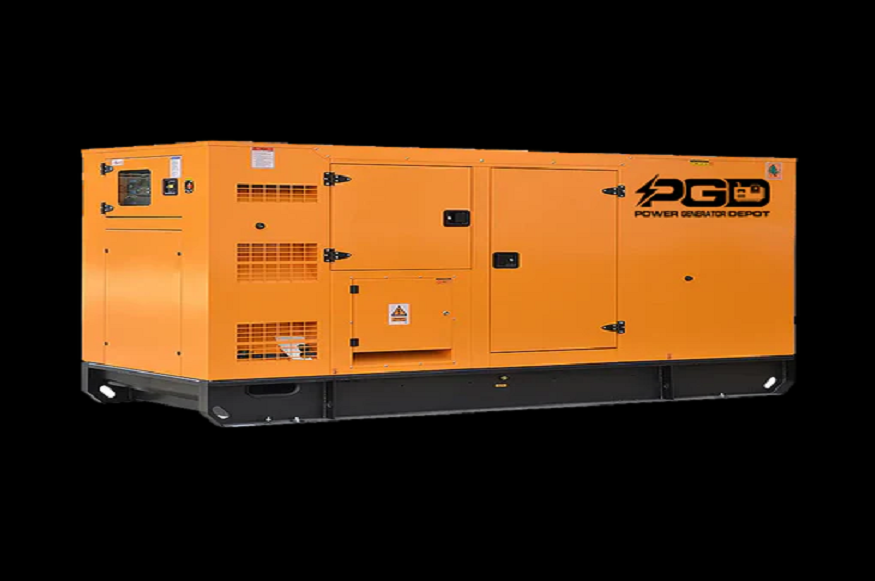
Most homeowners shopping for generators think about wattage first and noise second. That’s exactly backwards. What you want to know, when choosing a generator, is how loudly it will run when you’re trying to sleep after the power goes out and you’ve stuck this thing in your backyard (as far away from the house as you can get it).
That figure is almost never advertised. Generators are marketed by their maximum, “I’ve overloaded and now the engine’s on fire” decibel rating. For instance, a 7,000-watt portable generator might be rated at 78-85 dB at 23 feet (though many manufacturers don’t publish this data for any of their models). The European Union requires all newly manufactured generators to have a decibel rating of 100 dB or less by 2006. At least they’ve got their priorities straight.
The number you actually want to compare isn’t the peak rating at all. What you want is the quarter-load decibel rating. This tells you how loudly the unit will run when carrying a realistic, middle-of-the-night load. A typical example might be a refrigerator, a lamp or two, and power strips with a computer and a couple of other small electronics charging.
This is how most people actually run their generator, and extremely far from the “full scream” operation for which the peak rating applies. When you’re browsing options at Power Generator Depot, you can compare models specifically by their decibel ratings at various load levels, not just the headline wattage number. A standard portable generator under a quarter load is about as loud as a motorcycle passing by, or 80-100 dB.
Read More: How to Design a Stylish Home That Supports Lifelong Living
The Physics of Placement
Just putting distance alone works wonders. It’s estimated that the sound energy you receive from an engine is cut in half for every doubling of your distance from it. That corresponds to a reduction of about 6 dB. So, you don’t need to move it halfway to the next county to see results.
Barriers, Softscape, and Reflective Surfaces
Sound is different depending on what it bounces back from. Hard surfaces reflect sound waves, shooting noise back into the world. Soft surfaces absorb those waves. So, a generator against a vinyl fence on a concrete pad? Not helping your cause, sound-wise.
Planting thick shrubs between the unit and neighboring properties will give you a nice layer of absorption. It won’t save you from a super-loud engine, but paired with distance and barrier placement, it shaves off decibels that’ll make a difference to your comfort. Acoustic barrier panels and enclosure cabinets up the effectiveness on that front. A ventilated, baffle box-style enclosure with offset air intake vents traps noise inside the structure, giving it escape room to recirculate air around the engine.
Read More: Do You Need a Letting Agent in Colliers Wood as a First-Time Landlord?
On that note, it’s a ventilation point. Non-negotiable. Any enclosure that pinches off the engine from sucking fresh air in to cool itself is going to overheat the unit and potentially kill you and your neighbors with carbon monoxide. Know that you’re still keeping at least 20 feet of clearance from any window, door, or vent opening no matter how you build an enclosure. No reduction in sound is worth compromising there.
Managing Exhaust Direction
Exhaust noise is directional. The pipe has an obvious front, and whatever is in front of it gets the loudest signal. Most homeowners never think to mess with exhaust orientation, but simply pointing the outlet away from the house and neighboring properties makes a genuine difference.
Keep exhaust pointed away from any reflective surface. Vinyl siding in particular takes damage from sustained heat exposure at close range, and it bounces sound right back. Pointing exhaust toward an open yard or a planted buffer zone reduces both the acoustic and thermal impact. Aftermarket exhaust mufflers are available for most portable generator models and can be worth adding if you’ve already done everything else and the noise is still an issue.
Combining Strategies For Real Results
There isn’t a single solution available to magically get rid of any noise that a generator could make. It doesn’t work like that. What you are actually trying to do is to add up various small solutions like distance, barrier placement, surface absorption, vibration isolation, exhaust orientation together so that you can reduce the noise to a point that it will be in a tolerable and legally allowed level.
For most homeowners, the order of operations looks like this: choose a low-decibel unit rated at quarter-load, position it at maximum safe distance using L-shape placement behind a corner of your home or garage, set it on gravel or an anti-vibration pad, orient the exhaust away from neighbors and hard surfaces, and add enclosure or barrier options only if those first steps aren’t enough.
Running quieter equipment doesn’t require spending more money than you have. It requires thinking about placement before the concrete is poured and the habits are set.




More Stories
How to Modernize an Older Character Home Without Losing Its Original Charm
How to Design a Stylish Home That Supports Lifelong Living
Do You Need a Letting Agent in Colliers Wood as a First-Time Landlord?