
For too long, accessibility and good design have been seen as incompatible. The reality is that a well-designed home that is meant to serve you well for decades of your life can be one of the most thoughtful, beautiful homes you’ll ever live in.
Start with the floor plan, not the fittings
The most important design choice for lifelong living doesn’t even have a brand name – it’s the design of space. Hallways need a minimum of 32 to 36 inches of clear passage, not because of wheelchairs per se, but because that width just feels comfortable and easy to live in at any age.
Open-concept layouts do a lot to support this. It’s a compromise, a kind of lowest-common-denominator layout that minimizes dead-end or tight spaces and also serves to maximize the apparent size of a home; if it potentially works best for aging in place, it’s because it works best. Level thresholds between rooms – where a floor simply carries on from one space to the next without a raised edge – are another one of those decisions that costs almost nothing at build or renovation stage and pays dividends for the next seventy years.
The thing about good circulation space is that it’s invisible when it’s done right. You don’t notice a well-proportioned hallway. You only notice one that’s too narrow.
Vertical mobility and multi-level access
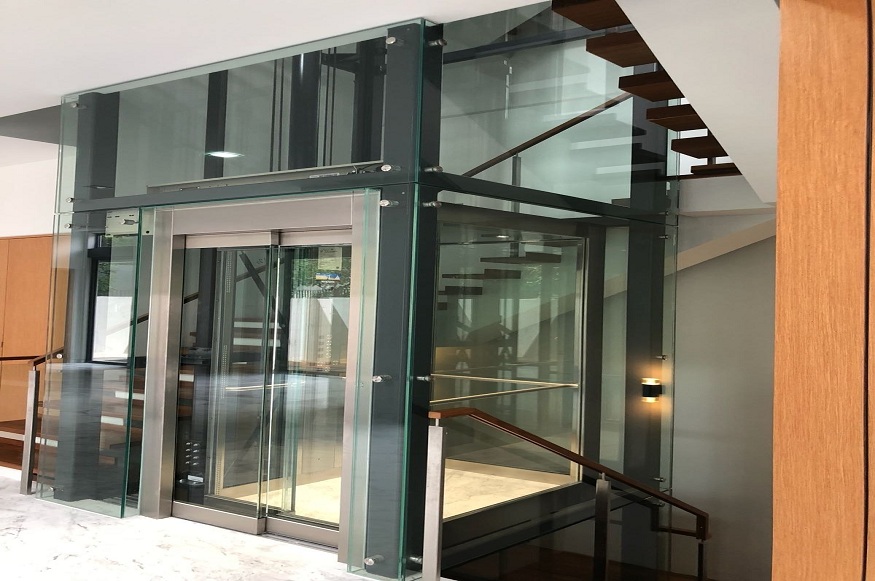
Homes with multiple levels pose a unique problem but one that doesn’t necessarily have to rely on interior design to solve as a first port of call. Platform lifts however have long moved away from the functional but more often than not box bolted onto a staircase wall. Working with platform lift specialists allows homeowners to specify enclosure style, finish, and footprint sizing exactly to their home. Glass panels, brushed metal, designs and footprints that nominally fit into the existing home’s aesthetic are the order of the day.
Invisible accessibility in the details
There are two types of accessible design. One that clearly stands out and one that you need to observe carefully to notice it was designed with accessibility in mind.
Read More: Do You Need a Letting Agent in Colliers Wood as a First-Time Landlord?
Take lever-style door handles. They are much easier to use than round knobs for everyone who is carrying something, has arthritis, or wet hands. On top, they are often used in contemporary and industrial-style buildings. So, both the utility and the look are pushing in the same direction.
Rocker light switches are no different. Bigger contact area, sleeker design, easier to use – the version for everyone is often the better-looking alternative. Most elderly people prefer to stay in their homes while they get older. However, it’s not common for homes to be built with accessibility features in mind for seniors, these are often added on in time by the homeowner.
Bathrooms built to last
The bathroom is typically where most design decisions are compromised to “be safe or future-proof”, and often it’s just assumed that accessibly designed spaces can’t look like a luxury, but they really can, it just takes a little forethought.
A wet room for example built in the way that considers both aspects deeply: Using large format, high-quality non-slip tiling – suddenly it looks like a spa. Although it’s not an issue. The shower tray edge is gone entirely. Reinforced walls behind the tile can support grab bars or decorative rails at any point – but because the reinforcement is structural, there’s nothing to see now. You’re building in the option without committing to the look.
Read More: Storage vs. Instant Water Heaters: Which One Fits Your Lifestyle?
Walk in shower dimensions, and wider door frames for that matter, should be designed for the most generous interpretation of how the space will be used. Reduce the slip of the wrist or feeling that you don’t trust the trajectory of your grab by knowing that the things you need for safety are also well, really quite lovely.
Lighting as a design system
A single overhead light is a blunt instrument. It casts shadows where you least want them, reflects off computer and TV screens, and floods the room with flat, featureless light that does nothing to create an atmosphere.
All of this is solved by “layering” light. Ambient light provides overall illumination and reduces shadows; task light directs light to where you need it for cooking or reading; and accent light highlights architecture details and pictures.
A layered approach also creates a home that is instantly photogenic and feels more than the sum of its parts. Task lighting in the kitchen and bathroom is particularly valuable, as is accent lighting to illuminate art and architecture.
Design that doesn’t date itself
Homes that become more suitable with each passing year are those where careful decisions are made to ensure a longer useful life. Following the thought process of “not what I need right now, but what will this space on average need to do over the next thirty years”, which leads to “reasonable proportions”, “using mostly durable materials”, “ensuring the necessary infrastructure is in the walls and floors”, there’s a good chance that this home is, or will become, a convenient home.
A home that works better doesn’t directly disclose the reasons the kitchen is slightly wider, the hallway has room for a grab, or the light switches are a little lower. It just happens that way.



More Stories
How to Modernize an Older Character Home Without Losing Its Original Charm
A Homeowner’s Guide to Noise Reduction and Placement for Outdoor Equipment
Do You Need a Letting Agent in Colliers Wood as a First-Time Landlord?