
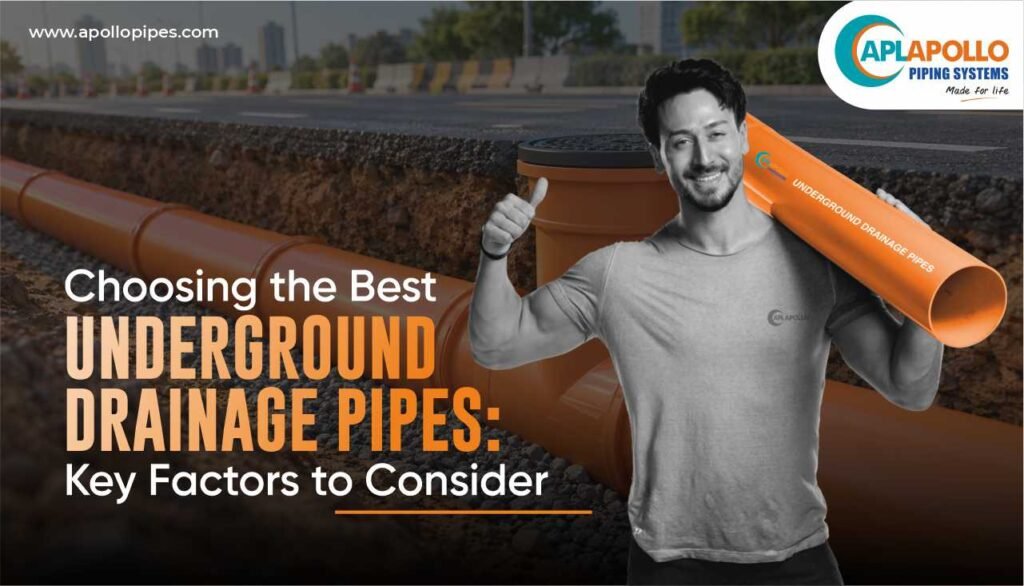
Underground drainage pipes play an important role in maintaining hygienic, functional and well-planned infrastructure. From residential buildings and commercial complexes to industrial facilities, these pipes help transport wastewater and surface water safely to designated drainage or treatment systems. Choosing the right underground drainage pipes is essential for reliable flow, long-term durability and fewer maintenance issues. Factors such as pipe material, diameter, load-bearing capacity and installation method can affect the overall performance of a drainage network. Understanding these considerations helps homeowners, builders and contractors make informed decisions that suit their project requirements and budget.
Understanding Underground Drainage Pipes
Underground drainage pipes are installed below ground level to carry wastewater and other drainage flows away from buildings, roads and developed areas. Depending on the system design, they may transport domestic sewage, industrial effluent or rainwater collected from surfaces.
Read More: Burst Flexible Hose Mistakes That Can Turn a Leak Into Major Water Damage
Common materials include PVC-U (unplasticised polyvinyl chloride), uPVC, HDPE and concrete, each offering different characteristics in terms of strength, weight, chemical resistance and installation. Selecting suitable pipes requires an understanding of the site’s soil conditions, expected flow, depth of installation and the type of waste being conveyed.
Key Factors to Consider When Choosing Underground Drainage Pipes
1. Material and Durability
The drainage pipe material should suit the underground environment and the intended application. Pipes remain buried for years, often exposed to moisture, changing soil conditions and substances carried by wastewater. PVC-U and HDPE pipes are commonly considered for their corrosion resistance and practical handling characteristics, while concrete may be suitable for certain large-scale drainage applications. Assess the material’s durability, compatibility with the wastewater and suitability for the project’s installation conditions before making a decision.
2. Pipe Diameter and Flow Capacity
Pipe diameter directly affects how much wastewater a drainage system can carry. A pipe that is too small may struggle during periods of heavy flow, while an unnecessarily large pipe may increase project costs. The right size depends on the number of users, expected wastewater volume, number of connected outlets and the drainage layout. Pipe slope and the internal diameter also influence flow performance. Follow the design specifications and applicable plumbing or civil engineering requirements when selecting pipe dimensions.
3. Strength and Load-Bearing Capacity
Buried pipes must withstand soil pressure and loads from above. These may include vehicle movement, heavy equipment, nearby structures and the weight of the backfill material. Installation depth and soil conditions also affect the forces acting on a pipe.
Read More: What Should Landlords Look for in an Ilford Letting Agent?
Check the pipe’s stiffness or strength classification against the expected loads and burial conditions. Correct bedding, backfilling and compaction are equally important because even a suitable pipe can become damaged if installation is carried out incorrectly.
4. Chemical and Corrosion Resistance
Wastewater may contain cleaning agents, salts, acids, alkalis and other substances that can affect certain materials over time. Choosing pipes with appropriate chemical resistance helps maintain the integrity of the drainage network and reduces the risk of premature deterioration. PVC-U pipes, for example, offer resistance to several commonly encountered chemicals. However, compatibility depends on the substance, its concentration, temperature and exposure duration, particularly in industrial environments.
5. Jointing System and Installation
A reliable jointing system helps prevent leakage, soil infiltration and avoidable repairs. Depending on the pipe design, joints may use solvent cement, rubber rings or other approved connection methods. Check that the selected pipes and fittings are compatible and that installers follow the manufacturer’s instructions. Proper alignment, joint preparation, bedding and backfilling help create a dependable underground drainage system. Easy handling can also simplify installation, particularly across larger projects.
6. Maintenance and Service Life
Long-term performance matters because repairing buried pipes can involve excavation, labour and disruption. Pipes with smooth internal surfaces can support efficient flow and help limit deposits under suitable operating conditions. Access points for inspection and cleaning should also be included in the drainage design. When comparing options, consider expected service life, installation costs, maintenance requirements and the consequences of potential repairs rather than focusing only on the initial purchase price.
7. Compliance with Standards
Before purchasing underground drainage pipes, review the relevant technical specifications, quality certifications and local building requirements. Confirm the required dimensions, stiffness class, intended application and installation guidelines. For public infrastructure or industrial projects, additional engineering specifications may apply. Checking documentation with the supplier and consulting a qualified professional can help ensure the selected system meets the project’s technical and regulatory requirements.
Common Applications of Underground Drainage Pipes
Underground drainage pipes are used in individual homes, apartment buildings, shopping centers, office complexes, factories and municipal sewerage networks. They also help carry surface water away from roads, parking areas and other developed spaces. In industrial facilities, the selected piping system must be suitable for the type of wastewater being transported. Similarly, residential projects may require different pipe sizes and stiffness classes from large commercial developments. Considering the intended application, ground conditions, drainage layout and expected flow helps ensure a suitable and dependable installation.
APL Apollo’s Underground Drainage Pipes
APL Apollo offers an underground drainage system made from rigid, unplasticised polyvinyl chloride (PVC-U) pipes designed for non-pressure applications. These pipes are used to convey domestic sewage, industrial waste, surface water and potable water in suitable applications. Their ageing resistance supports long-term use, with the manufacturer stating a normal service life of up to 50 years under its specified conditions. APL Apollo underground drainagepipes also offer resistance to acids, alkalis and salts, making them suitable for various sewerage and effluent disposal requirements where material compatibility is confirmed. Their low coefficient of friction supports efficient flow and can help reduce maintenance needs.
APL Apollo uses solvent-cement jointing for its pipes and fittings, facilitating handling and installation when the recommended procedures are followed. Available pipe sizes range from 63 mm to 400 mm, with options listed under SN-2, SN-4 and SN-8 stiffness classifications for different requirements. These features make the system worth considering for residential, commercial and infrastructure projects, subject to the project’s design and installation conditions. Explore our official website (www.apollopipes.com) for detailed specifications and to assess product suitability for your application.



More Stories
Burst Flexible Hose Mistakes That Can Turn a Leak Into Major Water Damage
The Stuff in Your Water That Ruins More Than Just the Taste